
Andean Cock-of-the-Rock (Tunki), Peru’s National Bird
The Andean cock-of-the-rock (Rupicola peruvianus), called tunki in Quechua, is Peru’s national bird, declared by Supreme Resolution 983 of December 11, 1941. It lives in the humid cloud forests on the eastern slope of the Andes, between 500 and 2,400 m (1,600–7,900 ft), from Venezuela to Bolivia. From Cusco, the closest place to see it is the cloud forest of Manu National Park, on the road down to the Amazon, where it is one of the birds we see on most of our trips.
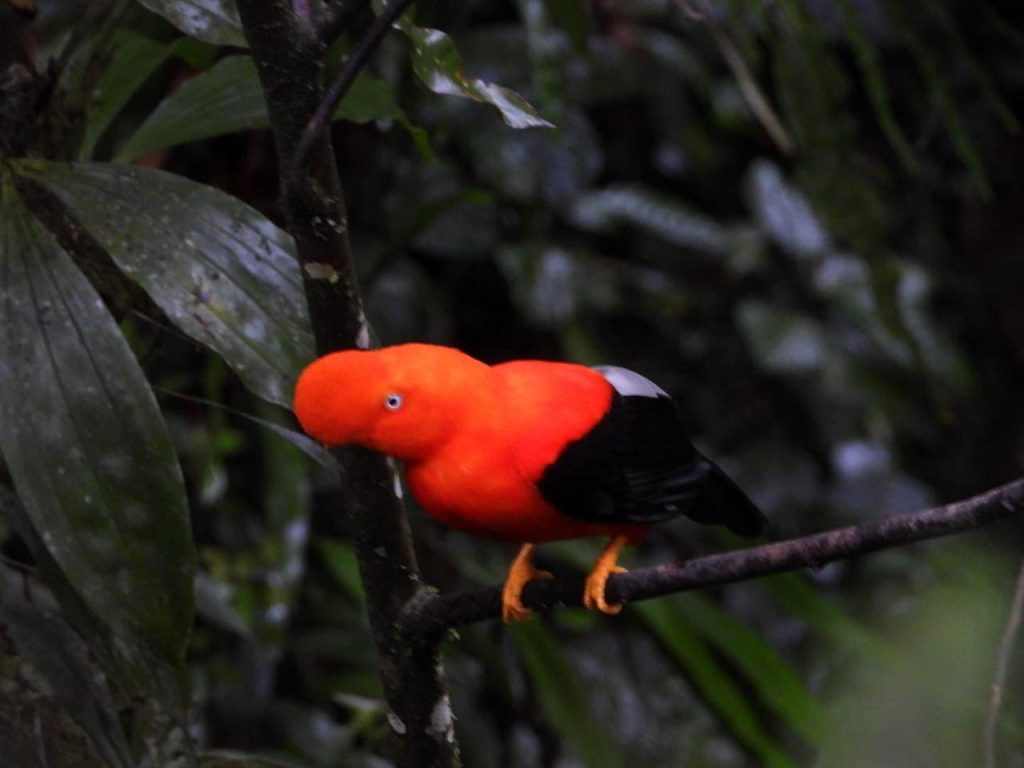
Cock-of-the-rock facts at a glance
| Scientific name | Rupicola peruvianus (family Cotingidae) |
|---|---|
| Names in Peru | Gallito de las rocas, tunki |
| Range | Andes of Venezuela, Colombia, Ecuador, Peru and Bolivia |
| Habitat | Humid montane forest, often near streams and ravines |
| Elevation | 500–2,400 m (1,600–7,900 ft) |
| Diet | Mainly fruit, plus insects and small vertebrates |
| Nest | A cup of mud on rock faces and ledges, built by the female |
| Eggs | Two |
| Conservation status | Least Concern (IUCN, 2018), with a decreasing population; listed in CITES Appendix II |
Males that dance together: the lek
The bright orange-red bird everyone photographs is the male. Males gather at a communal display ground, called a lek, where they hop up and down and give low croaking calls to compete for the females’ attention. The female is darker and less colorful, with the same general pattern. She builds the mud nest on a rock face and incubates the eggs alone; males take no part in nesting. That habit of nesting on rocks gives the bird its name.
Where to see the cock-of-the-rock in Peru
On our Manu tours we look for it on the first day, as we descend through the cloud forest near San Pedro, where cock-of-the-rocks come to feed and are usually seen perched on branches. Our guides see them most often from June to October. You can watch them on our 3-day and 4-day Manu tours, on every Manu National Park tour and, with more time for birds, on our 8-day Manu birding tour.
The species also lives along the Inca Trail near Machu Picchu, although sightings there are less frequent and need patience.
Is the cock-of-the-rock endangered?
No. The IUCN lists it as Least Concern because of its large range, but its population is thought to be decreasing as forest is lost, and it is captured for the international pet trade, which is why it is listed in CITES Appendix II. In protected areas such as Manu, its cloud forest habitat is safe.
Sources
- BirdLife International (2018): Andean Cock-of-the-rock factsheet (IUCN status, range, elevation, CITES)
- World Land Trust: Andean Cock-of-the-rock (lek, nest, diet)
- Andina, August 9, 2016 (Supreme Resolution 983 of 1941, in Spanish)
Updated October 2026.
Tours where you can see the cock-of-the-rock
Peru’s national bird is seen in the Manu cloud forest on the way down from the Andes on these trips.


Frequently asked questions
Is the cock-of-the-rock Peru's national bird?
Yes. The Andean cock-of-the-rock (Rupicola peruvianus), tunki in Quechua, was declared Peru's national bird by Supreme Resolution 983 of December 11, 1941.
Where can I see a cock-of-the-rock in Peru?
In the cloud forests of the eastern Andes, between 500 and 2,400 m. From Cusco, the closest place is the Manu cloud forest near San Pedro, which we visit on the first day of our Manu tours. It also lives along the Inca Trail near Machu Picchu, where it is seen less often.
When is the best time to see it?
Our guides see cock-of-the-rocks most often from June to October, on the way down through the Manu cloud forest.
Why is it called cock-of-the-rock?
Because the female builds her cup-shaped mud nest on rock faces and ledges. The bright orange-red bird is the male; the female is darker and less colorful.
Is the cock-of-the-rock endangered?
No. It is listed as Least Concern by the IUCN, but its population is decreasing because of forest loss and it is captured for the pet trade, so it is listed in CITES Appendix II.